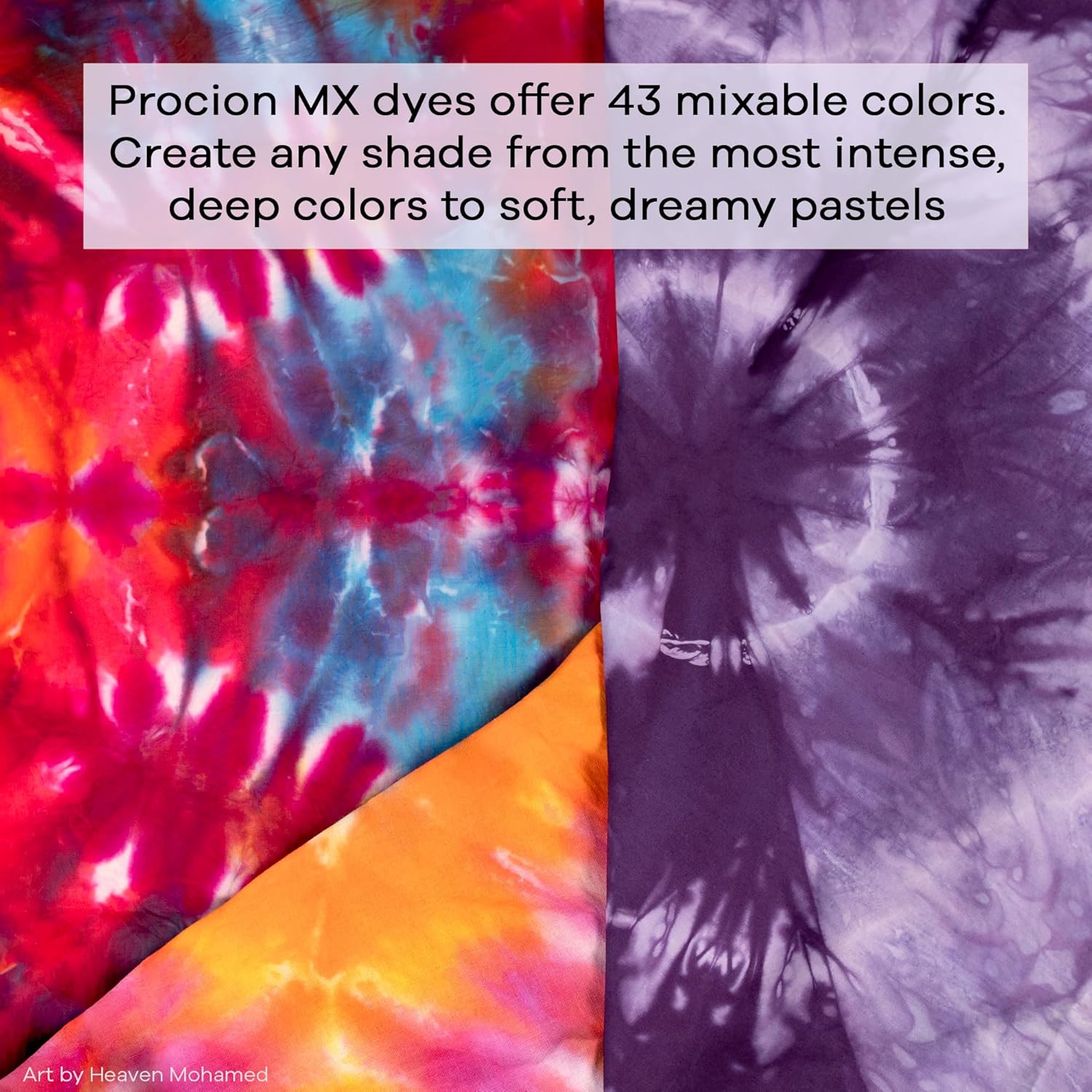
If you’ve ever pulled a finished piece out of the wash and watched the color fade from “forest green” to “pale sage disappointment,” you’ve lived the central problem of fabric dyeing: the dye and the fiber have to chemically want each other. Fabric dye isn’t a universal paint — different dye classes (meaning the underlying chemistry of how a dye bonds to fiber) work on different fiber types (cotton, polyester, silk, wool, nylon, and their blends). Procion MX, Rit All-Purpose, and Tulip One-Step are the three brands most makers encounter first, and they represent three genuinely different approaches to that chemistry. This article breaks down which dye does what, on which fibers, at which price points — so you can match the product to the project rather than discover the mismatch after the fact.
If you already know what fiber-reactive means and you’ve used soda ash before, the on-ramp above is quick review. From here, we go deeper.
The Core Chemistry Difference (and Why It Determines Everything Downstream)
The reason these three products behave so differently isn’t marketing — it’s bond type.
Procion MX is a fiber-reactive dye. When activated with an alkaline fixative (almost always soda ash, sodium carbonate), it forms a covalent bond directly with the cellulose molecules in natural plant-based fibers: cotton, linen, rayon, bamboo viscose, hemp. A covalent bond is a shared electron pair — meaning the dye molecule becomes, structurally, part of the fiber. Dharma Trading Co.’s fiber-reactive dye product education pages describe this bonding mechanism as producing washfastness that surface-coating dyes cannot replicate, and the practical result is that properly fixed Procion MX on 100% cotton can withstand hundreds of wash cycles without significant color loss.
The tradeoff: Procion MX will not bond to polyester, acrylic, or most nylon. On a 50/50 cotton-poly blend, it colors only the cotton half — producing a heathered, washed-out result called “frosting” that’s either a deliberate technique or a surprise depending on your expectations.
Rit All-Purpose is a direct dye (or more precisely, a blended formulation combining direct dyes with some acid dye components). It doesn’t require a separate fixative — it works in hot water, and the dye attaches to fiber through hydrogen bonding and Van der Waals forces rather than a covalent bond. PRO Chemical & Dye’s dye class selection knowledge base notes that direct dyes offer broad fiber compatibility — cotton, linen, silk, wool, nylon, and blends — at the cost of lower washfastness compared to fiber-reactive or acid dyes. The Surface Design Association’s member resource guide, “Dye Selection for Textile Artists,” reinforces this point: direct dyes are categorized as moderate-fastness options suitable for decorative and low-wash-frequency applications.
Rit also makes a separate product — Rit DyeMore — formulated specifically for synthetic fibers (polyester, acrylic, nylon) using disperse dye chemistry at near-boiling temperatures. That’s a meaningfully different product from All-Purpose, and conflating the two is one of the most common mistakes in comparison coverage.
Tulip One-Step bundles fiber-reactive dye chemistry with the soda ash already incorporated into the powder. The convenience is real: you skip the pre-soak step, which makes it genuinely faster for a first project. The Craft Industry Alliance’s 2024 Indie Maker Supply Trends Report notes the growth of pre-mixed all-in-one kits among entry-level hobbyists, driven primarily by reduced setup complexity. The practical ceiling: Tulip is formulated and packaged for immediate use in small quantities. Reformulation for larger batches, overdyeing, or precise color mixing is harder because you can’t separate the fixative from the dye powder to control the pH window independently.
Fiber-by-Fiber Decision Matrix
This is where the rubber meets the road. The table below shows approximate colorfastness ratings by dye class and fiber type, on a scale of 1 (poor) to 5 (excellent), drawn from technical documentation published by Jacquard Products and PRO Chemical & Dye.
| Fiber | Procion MX | Rit All-Purpose | Tulip One-Step |
|---|---|---|---|
| 100% Cotton | 5 | 3 | 4 |
| 100% Linen | 5 | 3 | 4 |
| Rayon / Bamboo Viscose | 5 | 3 | 4 |
| 100% Wool | 1* | 3 | 1* |
| 100% Silk | 2 | 4 | 2 |
| 100% Polyester | 1 | 1 | 1 |
| 50/50 Cotton-Poly Blend | 3† | 2 | 3† |
| Nylon | 2 | 4 | 2 |
*Procion MX at cool temperatures will weakly stain wool; it is not designed for it and fastness is unreliable. †Frosting effect on the poly portion; cotton portion dyes at full saturation.
Three Dye Profiles: Which Fits Where
Procion MX — The Cellulose Standard
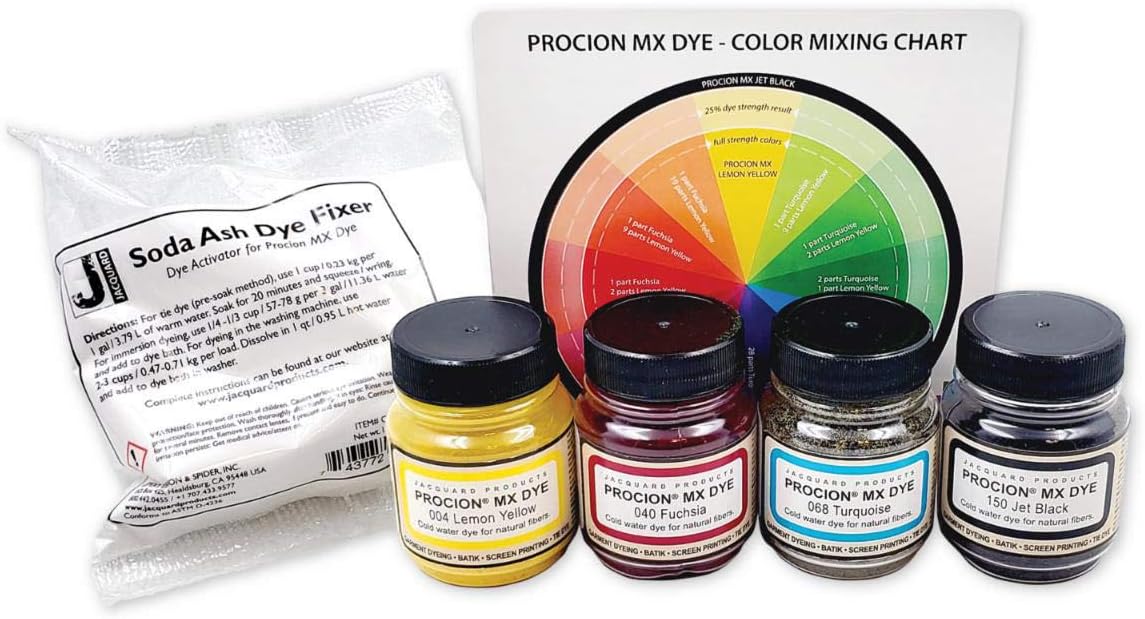
For makers working primarily in 100% cotton, linen, rayon, or bamboo viscose, Procion MX is the unambiguous technical choice. The covalent bond delivers washfastness that Rit and Tulip cannot match at the chemistry level. Jacquard Products’ Procion MX technical documentation describes the dye class as designed specifically for cellulose fibers, with color permanence ratings well above those of direct or all-purpose dye formulas.
For production-scale makers running repeatable colorways — the segment Dharma Trading Co. serves with bulk Procion MX at approximately $20–$60 per pound depending on color and volume — this isn’t a luxury decision, it’s a quality-control baseline. The higher upfront investment in soda ash, measuring equipment, and squeeze bottles or immersion vessels amortizes across dozens of projects; the cost-per-project math favors Procion MX significantly at any scale above a few sessions per year.
The Craft Industry Alliance’s 2024 Indie Maker Supply Trends Report notes that intermediate-to-advanced makers consistently cite cost-per-project efficiency — not upfront price — as the primary factor driving the transition from kit dyes to professional powder dyes.
Jacquard
$29.41
In stock on Amazon
Check price on AmazonRit All-Purpose — The Generalist Formula
Rit All-Purpose earns its place when fiber inventory is mixed or unpredictable. Its direct-dye chemistry bonds to cotton, linen, silk, wool, nylon, and many blends in a single hot-water bath with no separate fixative required. PRO Chemical & Dye’s dye class selection knowledge base positions direct dyes as the broadest-compatibility option in the consumer market, with the honest caveat that moderate washfastness is the trade-off for that versatility.
On silk and nylon specifically, Rit outperforms Procion MX in a standard hot-water immersion context. Rit’s direct-dye components bond to protein and synthetic fibers more reliably than cold-water fiber-reactive chemistry. For makers who occasionally need to dye across a mixed-fiber project — a bag with a cotton body, nylon webbing, and a silk lining, for instance — Rit is the only one of these three that produces color across all three components in one bath.
The honest ceiling: Rit All-Purpose on 100% cotton will continue to shed color over multiple wash cycles without a separate color-fixative treatment (Rit sells a Colorstay Fixative product for this purpose). Factor that into the per-project cost if washfastness on cotton matters to your end use.
Tulip
$19.99
In stock on Amazon
Check price on AmazonTulip One-Step — The Beginner On-Ramp
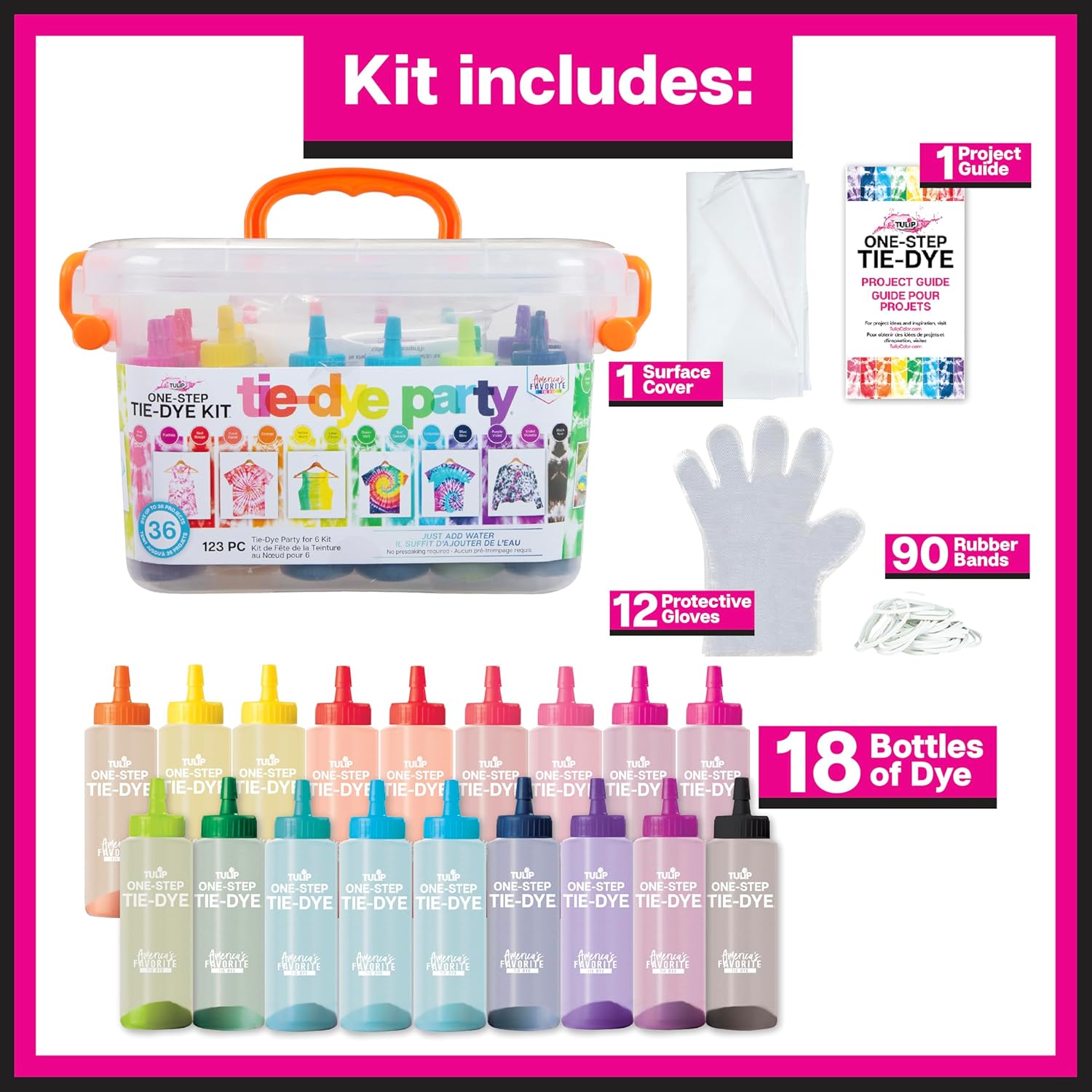
Tulip One-Step bundles fiber-reactive chemistry with pre-incorporated soda ash, meaning no separate fixative pre-soak is required. Retail kits typically run $12–$25 for a 5-color set covering one to three shirts, and the kit includes squeeze bottles and gloves. For a first tie-dye session — especially one running with beginners or in a classroom context — the setup reduction is meaningful and the results on 100% cotton are solid.
The Surface Design Association’s member resource guide, “Dye Selection for Textile Artists,” categorizes pre-mixed reactive kits as a legitimate entry point to cellulose dyeing, with the notation that advancing practitioners typically transition to separated dye-and-fixative systems once color theory work and batch sizing become priorities.
The structural limit: because the fixative is pre-blended into the powder, you cannot independently control pH timing the way you can with separate Procion MX and soda ash. That matters for techniques like low-water immersion with variable resist timing, overdyeing on previously dyed fabric, or mixing custom colors with predictable repeatability across batches. Tulip is not a permanent ceiling — it’s a valid and convenient starting point that will eventually prompt the upgrade itself.
Rit
$5.98
In stock on Amazon
Check price on AmazonThe Cost-Per-Project Math
For most makers, the decision between these three is partly chemistry and partly economics.
Tulip One-Step kits (typically $12–$25 for a 5-color kit) carry the highest cost per gram of dye, but require zero additional supply investment. No soda ash to buy, no mixing vessels required beyond what’s in the box. Per-project cost is front-loaded and straightforward.
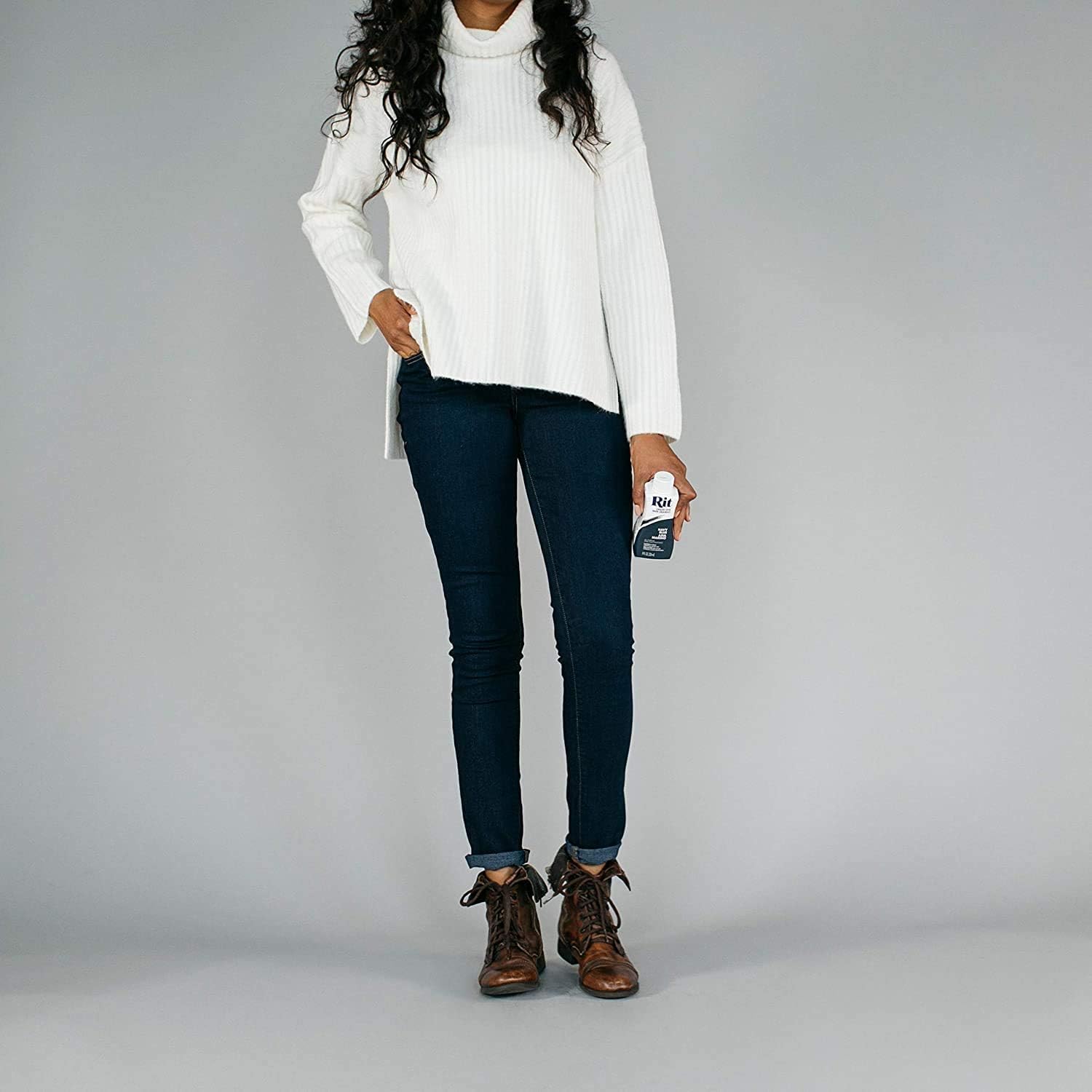
Rit All-Purpose liquid ($4–$8 per 8 oz. bottle) has a low entry cost. Without a separate color-fixative treatment on cotton, however, washfastness will continue degrading across washes. Factor in Rit’s Colorstay Fixative and the effective per-project cost rises — though it remains accessible for casual or low-frequency use.
Procion MX powder — Jacquard’s retail 2/3 oz. jars run approximately $6–$10 each and cover multiple projects at full saturation on cotton. Soda ash costs roughly $5–$8 per pound and goes a long way. At bulk quantities through Dharma Trading Co., the per-pound cost drops into the $20–$60 range. The cost-per-project math at any scale above a few sessions per year favors Procion MX substantially.
The Decision Rule
If you’re working with 100% cotton, linen, rayon, or bamboo viscose and you want colorfast results that hold through repeated washing: Procion MX is the correct dye class. Start with Jacquard’s retail jars if you’re testing colorways; move to Dharma Trading Co.’s bulk Procion MX once you have repeatable formulas you’re committed to.
If you’re working with wool, silk, or nylon as your primary fiber: None of these three are your best tool. Acid dyes — specifically Jacquard Acid Dye or PRO Chemical & Dye’s Washfast Acid line — are the right class. This comparison is a prompt to look at that category next.
If you’re working with polyester or high-poly blends: Disperse dyes (Rit DyeMore, Jacquard iDye Poly) are the only chemistry that bonds to synthetic fibers under normal workshop conditions. None of these three products address that fiber reliably.
If you need to dye across a mixed fiber inventory — cotton, silk, nylon — and washfastness is a moderate rather than primary priority: Rit All-Purpose has the broadest fiber compatibility of the three, with the honest caveat that it’s a generalist product producing generalist results.
If you’re doing a one-time cotton project with a beginner in the room and setup simplicity matters more than maximum fastness: Tulip One-Step is a reasonable tool for that specific context.
The step-up from Tulip to Procion MX isn’t about buying a better version of the same thing. It’s about switching to a different chemistry class that opens colorwork, precision mixing, and production-scale consistency that kit dyes structurally can’t offer. Once you’ve run a proper Procion MX batch on 100% cotton with a 12-hour cure and a cold-water exhaust rinse, the difference in color depth and wash retention is evident in the results — and that’s when the per-project math starts feeling obvious rather than academic.