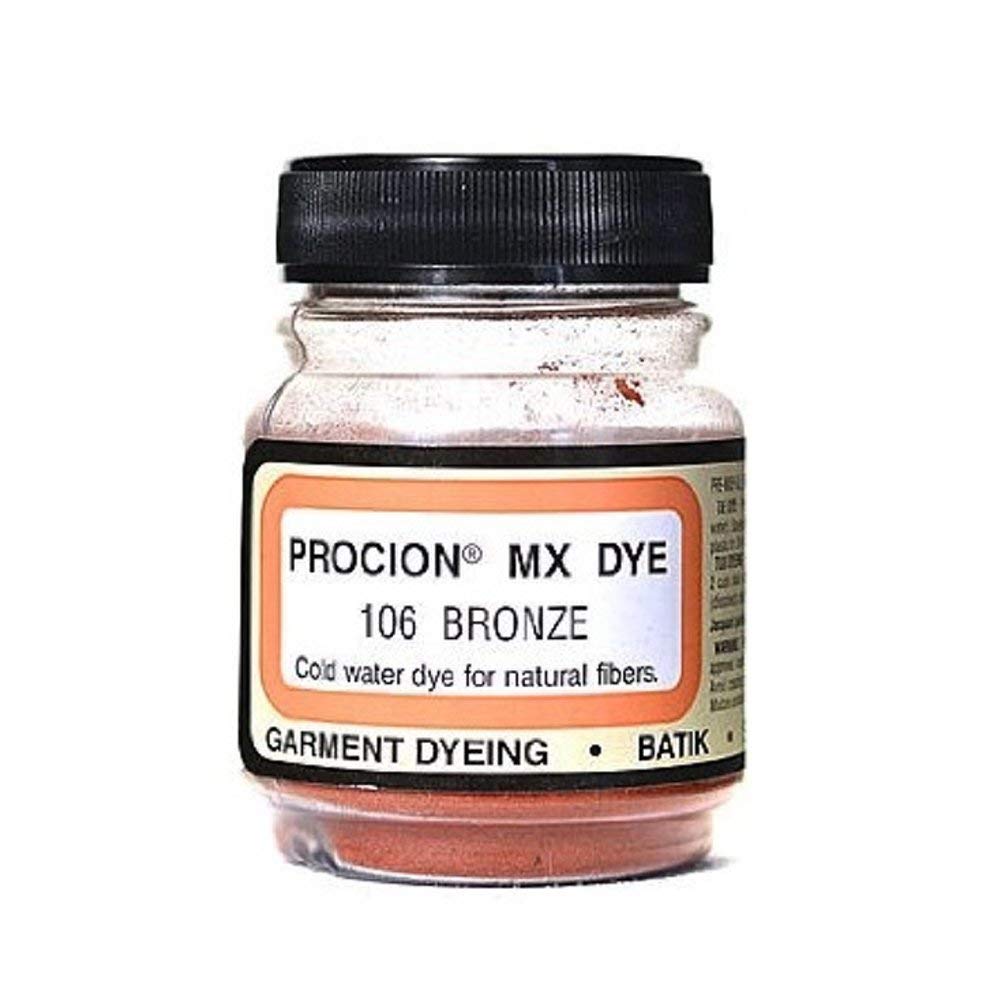
Procion MX (the brand name for a class of dyes called fiber-reactive dyes) is the workhorse of the studio dye world. Unlike fabric paint or all-purpose dyes, Procion MX forms a permanent chemical bond with natural fibers — primarily cotton, linen, rayon, and silk — which is why its colors survive hundreds of washes without significant fading. The catch? These dyes don’t behave like the color wheel you painted with in school. Mix two Procion MX powders together and the result is often muddier, warmer, or more shifted than you’d expect. That gap between theory and reality is what this article closes. You’ll walk away with three reliable primary dyes, a framework for mixing secondaries and neutrals, the math behind concentration ratios, and a clear-eyed look at where mixed dyes break down — so you can decide when a custom mix is worth the effort and when buying a pre-mixed color makes more sense.
Why Three Primaries (and Why the Specific Hue Matters Enormously)
The classic art-class primaries — red, yellow, blue — are approximations. In pigment painting, a slight bias in your red doesn’t sink a casual piece. In Procion MX mixing, it can mean the difference between a clean violet and a muddy brownish-purple that looked nothing like your swatch.
Procion MX dyes each carry an inherent hue bias: a red that leans slightly orange will always fight against a blue when you’re trying for purple, because the orange undertone introduces yellow into the mix and neutralizes toward brown. The Surface Design Association’s Color Theory for Fiber Artists (Vol. 44) makes this point explicitly: fiber-reactive dye mixing requires you to work with bias-aware primaries rather than generic red/yellow/blue labels.
The starting point that PRO Chemical & Dye’s mixing documentation recommends — and that Dharma Trading Co.’s Procion MX Color Mixing Guide echoes — is a set of three primaries chosen to have complementary biases: one that leans warm, one cool, and one that sits close to neutral. Here’s the set that consistently comes up in professional dyeing references:
The three-primary starting set:
| Role | Procion MX Color | Hue Bias |
|---|---|---|
| Magenta-primary | MX-B Fuchsia | Blue-leaning red |
| Yellow-primary | MX-8G Lemon Yellow | Green-leaning yellow |
| Cyan-primary | MX-G Cerulean Blue | Green-leaning blue |
This is a process-color model (similar to CMYK printing) rather than a traditional artist’s primary model. The logic: Fuchsia mixed with Cerulean produces clean violets without the brown cast you’d get from a warm red + blue. Lemon Yellow + Cerulean gives clean greens. Fuchsia + Lemon Yellow gives oranges and corals, though this mix is where most dyers first notice reactivity rate differences — which we’ll cover shortly.
The Chemistry Variable Nobody Talks About Enough: Reactivity Rate
Here’s the tradeoff that shifts everything in mixed-dye work: different Procion MX colors don’t react with fiber at the same speed.
Fiber-reactive dyes bond to cellulose fiber through a process called nucleophilic substitution — the dye molecule forms a covalent bond with the fiber in the presence of an alkali (typically soda ash, or sodium carbonate) and water. The speed of that reaction varies by dye chemistry. Procion MX dyes fall into two broad reactivity classes:
- MX (monochlorotriazine) reactive — the majority of the line, moderate reaction rate
- Some specialty colors lean toward faster or slower strike rates depending on their specific chromophore chemistry
In practical terms, this means that when you mix a fast-striking yellow with a slower violet, the yellow bonds first. On a long immersion dye (say, 60 minutes at room temperature with soda ash), that mix will shift warmer than your original swatch suggested. The Interweave article on Fiber-Reactive Dye Mixing for Repeatable Results describes this as “differential exhaustion” — the fast-striking color depletes from the bath first, leaving a skewed ratio for the remainder of the process.
The practical implication for your recipes:
If you’re mixing across reactivity classes, swatch at your actual process temperature and time, not in a quick beaker test. A 20-minute low-temperature swatch will look different from the same recipe run in a 45-minute warm bath. PRO Chemical & Dye’s documentation notes that turquoise (MX-G Cerulean and its relatives) is a notably slow striker relative to most yellows and magentas. This means blue-heavy recipes often need either longer immersion time or a slightly elevated ratio of the blue component to hit your target hue after differential exhaustion is factored in.
Recipes and Ratios: By the Numbers
These are starting-point ratios, expressed as parts of stock solution (not weight of dry powder). The conventional stock concentration is 2% solution: 2 grams of Procion MX powder dissolved in 100ml of warm water. Mix dye solutions before adding soda ash — soda ash triggers the reaction and gives you a working window of roughly 4 hours before significant hydrolysis (the dye bonding to water molecules instead of fiber, rendering it spent).
By the numbers — four foundational mixed colors from the three-primary set:
| Target Color | MX-B Fuchsia | MX-8G Lemon Yellow | MX-G Cerulean |
|---|---|---|---|
| Orange | 2 parts | 6 parts | — |
| Violet | 5 parts | — | 3 parts |
| Green | — | 3 parts | 5 parts |
| Neutral/Black approach | 2 parts | 2 parts | 4 parts |
A few clarifications on the table above:
Orange: The Fuchsia-to-Yellow ratio swings orange quickly — Fuchsia is highly saturated, so small additions shift the value fast. Start at 1:3 and adjust toward 2:6 for a deeper burnt-orange. Dharma’s mixing guide notes that “true” oranges are often more reliably purchased as a pre-mixed MX-4R Sun Yellow–adjacent color rather than mixed, because the Fuchsia’s pink bias shows in pale orange washes.
Violet: This is where the three-primary advantage pays off. Fuchsia + Cerulean with no yellow interference produces a genuinely clean violet — something a warm red and ultramarine cannot do. Adjust toward more Fuchsia for red-violet, more Cerulean for blue-violet.
Green: Cerulean-heavy mix produces a teal-leaning green. For a warmer grass green, Dharma’s guide suggests substituting MX-2G Bright Yellow for Lemon Yellow — the slightly warmer cast fills in the gap. Either way, yellows hit fast; pull a swatch at 30 minutes and at 60 minutes to see the drift in long baths.
Neutral/Black approach: True black from primaries alone is difficult. The three-primary neutral shifts warm-brownish at most concentrations. For production work, Jacquard Products’ technical documentation recommends starting with a dedicated black (MX-CW Black or similar) and tinting it rather than building from primaries.
When Mixed Recipes Break Down (and What to Do About It)
Mixed colors fail in four predictable ways. Each has a different fix.
1. Hue drift between batches. Water temperature, salt concentration, and bath ratio all affect how quickly dye strikes. A recipe that produces a reliable teal at 70°F will shift greener at 85°F because the yellow exhausts faster in a warmer bath. Fix: standardize your process variables before finalizing a recipe — same temperature range, same liquor ratio (grams of fiber per liter of water), same soda ash timing.
2. Hydrolysis killing your blues and teals. Cerulean and turquoise hues are most vulnerable to premature hydrolysis. If your stock solution was mixed more than 4 hours ago with soda ash already added, the blue component is degraded. Fix: keep your soda ash and dye solutions separate until you’re ready to begin. Mix dye stocks plain; add soda ash to the bath separately or as a pre-soak.
3. Uneven strike on longer pieces. A mixed dye in an immersion bath will show more hue variation across a long length of fabric than a single-color dye, because differential exhaustion affects the front-of-bath versus back-of-bath dye concentration. Fix: either use low-water immersion (Dharma’s technique documentation covers this), or work in smaller bath volumes with more agitation.
4. Fading on one component after washing. If your mixed violet holds the red but fades the blue after three washes, one of two things happened: incomplete fixation of the blue component (usually a cure time issue — fiber-reactive dyes need 24 hours at room temperature or 30 minutes at around 100°F to fully bond), or the blue was already partially hydrolyzed before it hit the fiber. Fix: extend your cure time before the first wash, and wash initially in cool water with a small amount of synthrapol or plain dish soap to remove unfixed dye cleanly. PRO Chemical & Dye’s afterwash instructions specifically recommend a hot final rinse to remove any last loose dye molecules.
The Decision Frame: When to Mix vs. When to Buy Pre-Mixed
For intermediate practitioners, this is the real question. Here’s the honest tradeoff map.
Mix from primaries if:
- You need a color that doesn’t exist in a manufacturer’s line
- You’re building a custom colorway that must repeat across multiple seasons (you can document and reproduce a recipe from three reliable primaries more easily than chasing a discontinued pre-mix)
- You want to understand your palette at a structural level — knowing that your teal is 3 parts Cerulean / 1 part Lemon Yellow means you can adjust it intentionally rather than guessing
Buy a pre-mixed color if:
- You need a reliable black, navy, or brown (these are genuinely difficult to achieve cleanly from primaries alone)
- You’re in production and mixing error costs real yardage — a pre-mixed turquoise from Dharma or PRO Chemical will perform more consistently batch-to-batch than a hand-mixed cerulean/yellow blend
- Your target is a high-saturation single hue (a pure process yellow, a bright red) — primaries are optimized as starting points, not destinations
The cost math: three primary Procion MX dyes purchased in 2-oz containers (roughly $4–$6 each from Dharma Trading Co. in 2026 pricing) give you a full theoretical palette for around $12–$18. A pre-mixed secondary color adds another $4–$6. If you’re running a palette of 8–12 working colors, mixing from three primaries is meaningfully cheaper, but only if your process is consistent enough to reproduce your recipes. Inconsistent process doesn’t just waste dye — it wastes the fabric you’re dyeing, which is almost always the more expensive input.
If X, Then Y: The Decision Rules
- If you’re building a custom colorway that must repeat: Invest in the three-primary set, document your recipes obsessively, and standardize your water temperature before anything else.
- If you’re getting muddy secondaries from your current primaries: Check the hue bias of your red. If it’s a warm red (MX-4R or similar), swap to MX-B Fuchsia for violet work.
- If your blues are fading faster than your other colors after washing: Your soda ash was added too early, or your cure time was too short — not a mixing problem, a process problem.
- If you need a reliable black or navy for production: Buy it pre-mixed. The time and dye spent chasing a clean black from primaries is rarely worth it at scale.
- If your mixed color looks right in the stock solution but wrong on fiber: You’re seeing differential exhaustion in action. Adjust the ratio of your slow-striking component (usually blue or turquoise) upward by 20–30% and re-swatch.
Procion MX is an unusually forgiving dye system once you understand what it actually responds to — and almost everything it responds to is within your control. Three well-chosen primaries, soda ash added at the right moment, and a documented process give you more color range than any pre-mixed line can offer, at a fraction of the per-color cost. The chemistry is on your side; you just have to let the process catch up to the palette.