If you’ve ever pulled a freshly rinsed skein out of a dye bath and watched the color drain straight into the sink — not the yarn — you already know the problem this guide is here to solve. Dyes are not universal. They’re chemistry: each dye class is engineered to form a specific kind of bond with a specific kind of fiber molecule. Put the wrong dye on the wrong fiber and you don’t just get a weaker color — you often get no permanent color at all, because the dye has nothing to grab onto. The fiber you’re working with (cotton, wool, silk, polyester, nylon, a blend) determines which dye class can actually bond to it, and choosing correctly is the single most consequential decision you’ll make before spending $40 on a hand-painted merino skein or cutting into a run of Tencel shirting fabric. This guide gives you the cross-reference map and the decision logic behind it, so you can walk into a supply order with confidence.
The Four Dye Classes That Cover Most Studio Work
There are dozens of dye systems in existence, but for the fiber artist or small-batch maker working in 2026, four classes handle the overwhelming majority of use cases: fiber-reactive dyes, acid dyes, direct dyes, and disperse dyes. Understanding what each one does at the molecular level — in plain terms — is what lets you read a product label and immediately know whether it belongs in your studio.
Fiber-Reactive Dyes (Procion MX and Similar Formulations)
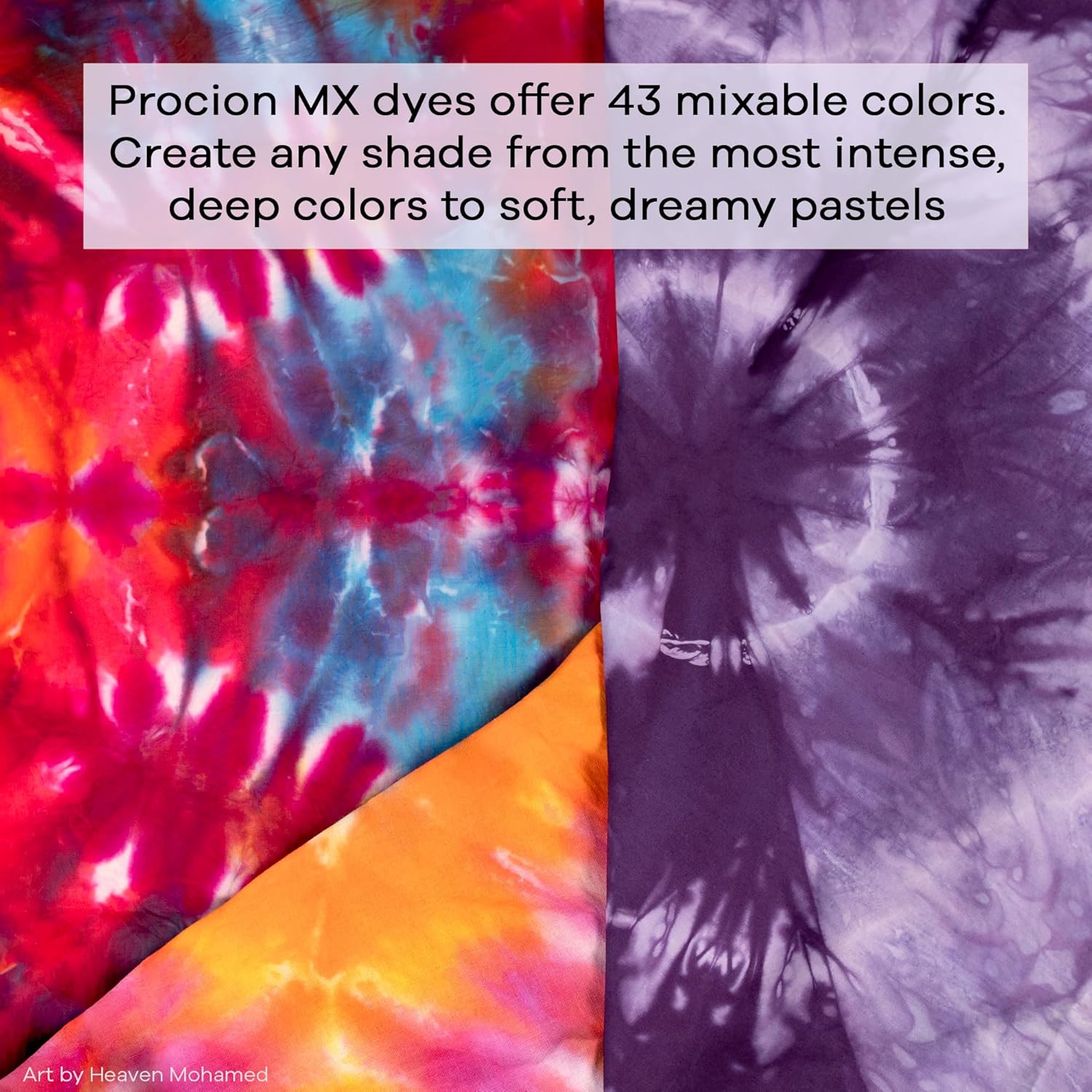
Fiber-reactive dyes form a covalent bond — essentially a permanent chemical attachment — directly to the cellulose molecules in plant-based fibers. That’s why they’re the workhorse for cotton, linen, hemp, rayon, bamboo, and Tencel (lyocell). When you fix with soda ash (sodium carbonate, which raises the pH to around 10–11 and activates the reaction), the dye molecule links to the fiber at the molecular level. Wash it a hundred times and the bond stays.
Procion MX is the industry standard formulation, sold by Dharma Trading Co., Jacquard Products, and PRO Chemical & Dye. Dharma’s fiber-reactive dye documentation is explicit: these dyes will not permanently bond to protein fibers (wool, silk) or synthetics without significant modification to the process — and in many cases not at all. You can use fiber-reactive dyes on silk with some success, but the bond is weaker and colorfastness suffers compared to using the correct dye class (acid dyes). On polyester? Essentially no bond.
The tradeoff to name explicitly: Fiber-reactive dyes require soda ash fixation, a specific cure window (typically 12–24 hours at room temperature, or heat-setting to accelerate), and a thorough synthrapol wash-out. Skipping any step degrades colorfastness. PRO Chemical & Dye’s technical bulletins note that underfixed fiber-reactive dye can bleed for multiple wash cycles — a real problem if you’re selling finished goods.
Acid Dyes (for Protein and Nylon Fibers)
Acid dyes bond to protein fibers — wool, alpaca, mohair, silk, cashmere — and to nylon. The “acid” in the name refers to the acidic bath condition required (typically white vinegar or citric acid to bring pH to roughly 4–5), not the dye being dangerous. In an acid bath with heat (around 180–212°F depending on the fiber and dye formula), acid dye molecules form ionic bonds with the amino acid groups in protein fiber.
Jacquard’s acid dye line and PRO Chemical & Dye’s Washfast Acid series are the two most commonly cited formulations in intermediate and advanced studio contexts. Interweave’s dyeing resource library draws a sharp distinction between Washfast Acid dyes (which offer superior light and wash fastness) and less expensive Leveling Acid dyes (which produce more even color but with somewhat lower fastness ratings). For that $40 merino skein, the Washfast category is worth the price premium.
The tradeoff to name explicitly: Acid dyes are heat-sensitive processes. Wool especially is prone to felting if you heat too aggressively or create thermal shock between the pot and the rinse water. Silk can handle higher temperatures more forgivingly. If you’re doing room-temperature dyeing (e.g., cold-batch methods), acid dyes are not your class — they need heat to bond properly.
Direct Dyes (and Why Most Intermediate Makers Move Past Them)
Direct dyes bond to cellulose fibers without a reactive fixation step, which sounds like a win. In practice, the bond is a weaker electrostatic attraction rather than a covalent link, and washfastness is noticeably lower. Those Tulip one-step kits and many entry-level union dyes (like standard Rit liquid formula) use direct or direct-blend chemistry.
Surface Design Association’s fiber compatibility overview notes that direct dyes can produce vivid initial color but fade significantly over repeated washing — which matters less for a one-time art piece or costume and matters enormously for wearable goods or a production run. You can improve fastness somewhat with a salt-and-heat fixation, and specialty fixatives like Retayne are widely used to help, but you’re compensating for a structural limitation.
The decision rule here is clean: If colorfastness over time is a requirement, direct dyes are a stopgap, not a solution. If you’re a production maker with a repeatable colorway across seasonal collections, this class will cause you headaches. The step-up to fiber-reactive (cellulose) or acid (protein) is almost always worth it once you’re past the beginner stage.
Disperse Dyes (for Synthetics, Especially Polyester)
Disperse dyes are engineered for hydrophobic synthetic fibers — primarily polyester, acetate, and nylon (though nylon also accepts acid dyes). The chemistry is fundamentally different: disperse dye molecules are essentially insoluble in water and work by diffusing into the polymer structure of the synthetic fiber at high temperatures (often 200°F+ or pressure-dyeing conditions). At lower temperatures, the dye sits on the surface and washes right off.
Jacquard’s iDye Poly line is the most accessible entry point for studio-scale synthetic dyeing. The product is formulated for stovetop high-heat use. PRO Chemical & Dye also carries disperse dye powders for bulk users. Both sources note that effective polyester dyeing requires sustained high heat that is not compatible with natural fibers — you cannot dye a poly-cotton blend to full saturation on both fiber types simultaneously with one dye class.
The tradeoff that trips up intermediate makers: Blended fabrics (poly-cotton, poly-rayon, poly-linen) are genuinely difficult. You can do a two-bath process — fiber-reactive for the cellulose component, then disperse for the polyester — but the heat required for disperse dyeing will strip or damage the fiber-reactive color. Dharma Trading Co.’s blend-dyeing guidance recommends fiber-reactive first, then evaluating whether the polyester component needs to be addressed separately, knowing there will be color shifts.
Quick Cross-Reference: Dye Class by Fiber
| Fiber | Best Dye Class | Common Products | Notes |
|---|---|---|---|
| Cotton, linen, hemp | Fiber-reactive | Procion MX, PRO Fiber Reactive | Requires soda ash fixation |
| Rayon, Tencel, bamboo | Fiber-reactive | Same as above | Tencel takes color very evenly |
| Wool, alpaca, mohair | Acid dye | Jacquard Acid, PRO Washfast | Heat + acid bath required |
| Silk | Acid dye (preferred) | Jacquard Acid, PRO Washfast | Fiber-reactive works with reduced fastness |
| Nylon | Acid dye or disperse | Jacquard Acid or iDye Poly | Acid dye typically sufficient |
| Polyester | Disperse dye | Jacquard iDye Poly | Requires sustained high heat |
| Poly-cotton blends | Two-bath process | Fiber-reactive + disperse | Color coordination is difficult |
| Acrylic | Not reliably dyeable | — | Basic dyes exist but are specialty/hazardous |
Where Intermediate Makers Lose Money (and How to Avoid It)
The most common and expensive mistake at the intermediate level isn’t buying a bad product — it’s buying a correct product for the wrong fiber. Here’s where the math gets real.
By the numbers:
- A 100g skein of hand-dyed-weight merino wool: $35–$55 retail (2026 pricing)
- Jacquard Acid Dye, 1 oz jar (covers approximately 1–2 lbs of fiber at full shade): ~$5–$8
- If you use Procion MX on that merino skein instead of acid dye: bond fails, color washes out, fiber is not re-dyeable without stripping — effective loss is the full cost of the skein plus your time
The decision rule that applies here: before you buy any dye, identify the fiber content first. If the label says “100% merino,” you are buying acid dye. If it says “100% cotton,” you are buying fiber-reactive. If it says “55% linen, 45% polyester,” you are making a deliberate choice about which component to dye and accepting that the other will be undertreated.
A secondary mistake is treating soda ash and acid fixation as optional or approximate. PRO Chemical & Dye’s technical documentation is specific about this: fiber-reactive dyes that haven’t been properly fixed with soda ash at an adequate pH will produce color that bleeds significantly in the first wash. The fix isn’t to wash more carefully — it’s to fix correctly before washing at all.
The Blend Problem and What to Do About It
Blended fabrics are the scenario where even experienced dyers have to accept a compromise. The core issue, as Surface Design Association’s compatibility overview frames it, is that the chemical conditions optimal for one fiber class are often harmful to another.
If you’re working with a poly-cotton shirting fabric for a small apparel run and want consistent, saturated color on both components:
- If X is primarily cotton (60%+): Use fiber-reactive for the dominant fiber and accept that the polyester component will remain lighter (a heathered or space-dyed effect). This is a usable aesthetic choice.
- If X is primarily polyester (60%+): Disperse dye at high heat. The cotton component will take minimal color and the result will look washed or two-tone.
- If X requires full saturation on both: Budget for a two-bath process, accept that color matching across both fibers requires significant testing, and plan on multiple sample runs before committing to a production quantity. This is not a beginner workflow.
The honest recommendation here is to source fabric with a fiber content that matches your dye class whenever you have a choice. For repeatable production colorways, working with 100% fiber-type materials (all cotton, all wool, all polyester) is significantly less complicated than managing blends — and the cost of sourcing clean-fiber fabric is almost always lower than the cost of failed dye runs.
The Decision Frame Before You Order
If you’re standing at a supply order with a fiber in hand (or on your screen), here’s the if-then logic:
- If the fiber is plant-based (cotton, linen, hemp, rayon, Tencel): Fiber-reactive dye. Procion MX from Dharma, Jacquard, or PRO Chemical & Dye. Budget for soda ash and synthrapol if you don’t already have them.
- If the fiber is protein (wool, alpaca, silk, cashmere, mohair): Acid dye. Washfast formulations if colorfastness matters (it almost always does). Budget for citric acid or white vinegar and a reliable heat source.
- If the fiber is polyester or acetate: Disperse dye at high heat. Jacquard iDye Poly is the most accessible entry point. Confirm your vessel can sustain 200°F+ safely.
- If the fiber is a blend: Identify the dominant component, decide which fiber you’re optimizing for, and accept or plan around the other. Two-bath processes are possible but add complexity and testing cost.
- If the label doesn’t clearly state fiber content: Don’t guess with an expensive skein. Burn-test a small sample (protein fibers smell like burnt hair; cellulose fibers smell like burnt paper; synthetics bead or melt) or contact the supplier before committing.
The dye class decision isn’t the most glamorous part of textile work, but it’s the one that determines whether your chemistry actually becomes color — or just goes down the drain.